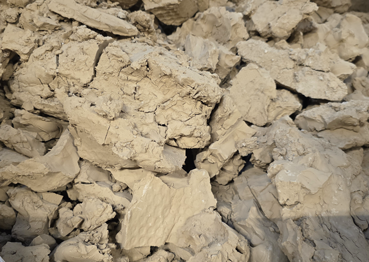
This project turns the 5 million tonnes of aggregate washing sludge produced in Switzerland every year into a valuable resource for the construction sector. It offers a low-carbon alternative to traditional binders while cutting mineral waste.
Switzerland's supply of mineral raw materials relies on a network of more than 500 gravel pits and concrete plants. Together they generate over 5 million tonnes of washing sludge each year, including around 1,000 tonnes a day in the canton of Geneva. These fine residues come from processing materials (washing, screening, flotation) and consist of very fine particles of clay, silt and sand.
Today, this sludge poses both a logistical and an environmental challenge. Most of it is sent to landfill at a cost of around CHF 20 per tonne, or stockpiled at extraction sites, which can limit how much of a deposit can be worked. Although it is rich in usable minerals, it is still classed as waste.
To help Switzerland reach its goal of climate neutrality by 2050, the RedCO2 project is developing a recovery chain for this sludge, turning waste into a resource.
The construction sector faces major challenges. The first is the growing scarcity of resources, sand in particular. It is becoming a critical resource, with global demand set to rise by 45% by 2060. In Switzerland, a shortage is looming as deposits run out. The second is the urgent need to decarbonise the sector: Portland cement production accounts for 8% of global greenhouse gas emissions and 96% of the carbon footprint of concrete and mortar. The third is waste management: landfill sites are filling up, and rising landfill fees call for alternative solutions.
The mineral composition of washing sludge varies widely, which opens the door to a range of uses. After heat treatment, the project focuses on four areas:
Our project turns a waste problem into a materials innovation with many benefits: less sludge sent to landfill, a smaller carbon footprint for construction materials, the preservation of natural resources and the creation of a local value chain.
Project partner(s)
Project leader - team
Abdelkrim Bennani
(HEPIA),
Louise Leduc (HEPIA)
,
Florian Fazio
(HEPIA),
Ayoub Ben Abbou (HEPIA)