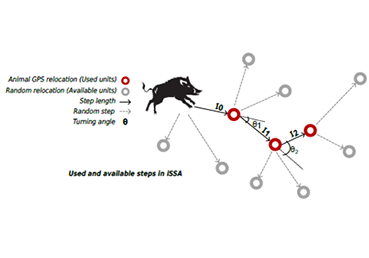
Hunting can lead to changes in the demography, distribution, behaviour and physiology of wildlife. Especially when conducted as large driven hunts with hunting dogs, can cause behavioural and physiological responses of wild boar. Indeed, hunting can affect spatial behaviour, space use, activity rhythms, feeding habits, and cause physiological responses due to increased stress, which in turn affects both animal welfare and quality of meat. Knowledge on the effect of different hunting methods on behavioural and physiological responses of wild boar is very limited. This is particularly challenging as the species has a great potential for transmission of diseases of both public and economic health concern.
In this project, supported by the Swiss National Science Foundation (SNSF), the HEPIA research team is collaborating with leading wild boar experts in Croatia and Slovenia to develop an original study design that combines behavioural, molecular and physiological data, aiming to understand the ecology and responses of wild boar exposed to different hunting methods.
The results obtained are intended for decision makers and other stakeholders in the region to help them determine the most appropriate hunting methods in line with management objectives, whilst taking into account animal welfare, the risk of disease transmission and the quality of the meat produced.
Importantly, the project is embedded in existing pan-European networks that aim to improve the dissemination of information on the spatial behaviour of wild boar among researchers and stakeholders, and to which the team has already contributed.
Thumbnail image: @Urbina et al. 2026
Project partner(s)
Project leader - team
Claude Fischer
(HEPIA),
Laurent Huber
(HEPIA),
Loreto Urbina
(HEPIA),
Lucas Villard
(HEPIA)